Prenatal stimulation and neonatal development: what we do before and after birth
A puppy does not begin to form on the day it is born. Neurological, emotional and behavioural development begins in the mother’s womb and passes through critical phases in the first weeks of life, when the nervous system is extraordinarily plastic and receptive. Science has shown that the mother’s experiences during gestation, the stimulations in the first days of life and the quality of maternal care measurably influence the temperament and resilience of the adult dog. At Shinjukawa, this is not a theoretical concept: it is a protocol we apply to every litter, from pregnancy to weaning.
The science of prenatal development
For a long time it was believed that the puppy was a “blank slate” at birth — that all behavioural development began after birth. The research of the last decades has overturned this view.
The puppy’s nervous system begins to develop very early during gestation. Fundamental brain structures such as the hippocampus (memory and learning), the amygdala (emotion processing), the cerebellum (motor coordination) and the hypothalamus (stress regulation) form and mature already in the womb. And during this maturation, they can be influenced by the environment.
In other words, the experiences the mother goes through during pregnancy influence the puppies’ development. The mechanism is hormonal: maternal cortisol — the stress hormone — crosses the placental barrier and reaches the fetuses. It has been demonstrated that chronically elevated levels of maternal cortisol can alter the development of the puppies’ hypothalamic-pituitary-adrenal (HPA) axis — the system that regulates the stress response for life. Puppies born to chronically stressed mothers show altered cortisol levels, greater reactivity to stress, and a potentially compromised immune system.
But if stress damages, maternal enrichment, on the contrary, is able to protect and strengthen.
Gestational enrichment — what the research says
A study published in 2025 in Applied Animal Behaviour Science provided for the first time direct evidence in dogs of what was already documented in other mammals: the environmental enrichment of dams during gestation influences the behaviour of the puppies.
The study compared pregnant dams subjected to an enrichment program — greater physical, social and cognitive stimulation during pregnancy — with dams kept under standard conditions. The puppies of the enriched mothers showed significantly different behavioural profiles at eight weeks compared with the puppies in the control group.
This result in dogs confirms what studies on rodents had documented for years: gestational enrichment increases BDNF (Brain-Derived Neurotrophic Factor) levels — the neurotrophic factor that promotes the growth and survival of neurons — in the brains of the offspring. It increases hippocampal neurogenesis (the birth of new neurons in the memory area), reduces anxious behaviours and improves cognitive performance. Effects that persist into adulthood and that, in some studies, are even transmitted to the next generation.
What we do during gestation
At around 25 days, as soon as pregnancy is confirmed, the dams are brought into the house, into a dedicated room and in close contact with us, where they are pampered and spoiled for the entire duration of the gestation.
Controlled feeding, rich in omega-3 fatty acids (DHA) that contribute to the puppies’ brain development, tactile stimulation through belly strokes, relaxing music, a stimulating, serene, comfortable environment full of positive interactions — the kind of stimulation that research has associated with benefits for the sensory development of the fetuses.
Nothing invasive or forced, simply the natural extension of our daily relationship with our dogs.
A dam that “feels good” is actively contributing to the neurological development of her puppies even before they are born.
The critical window — from birth to the first 16 days of life
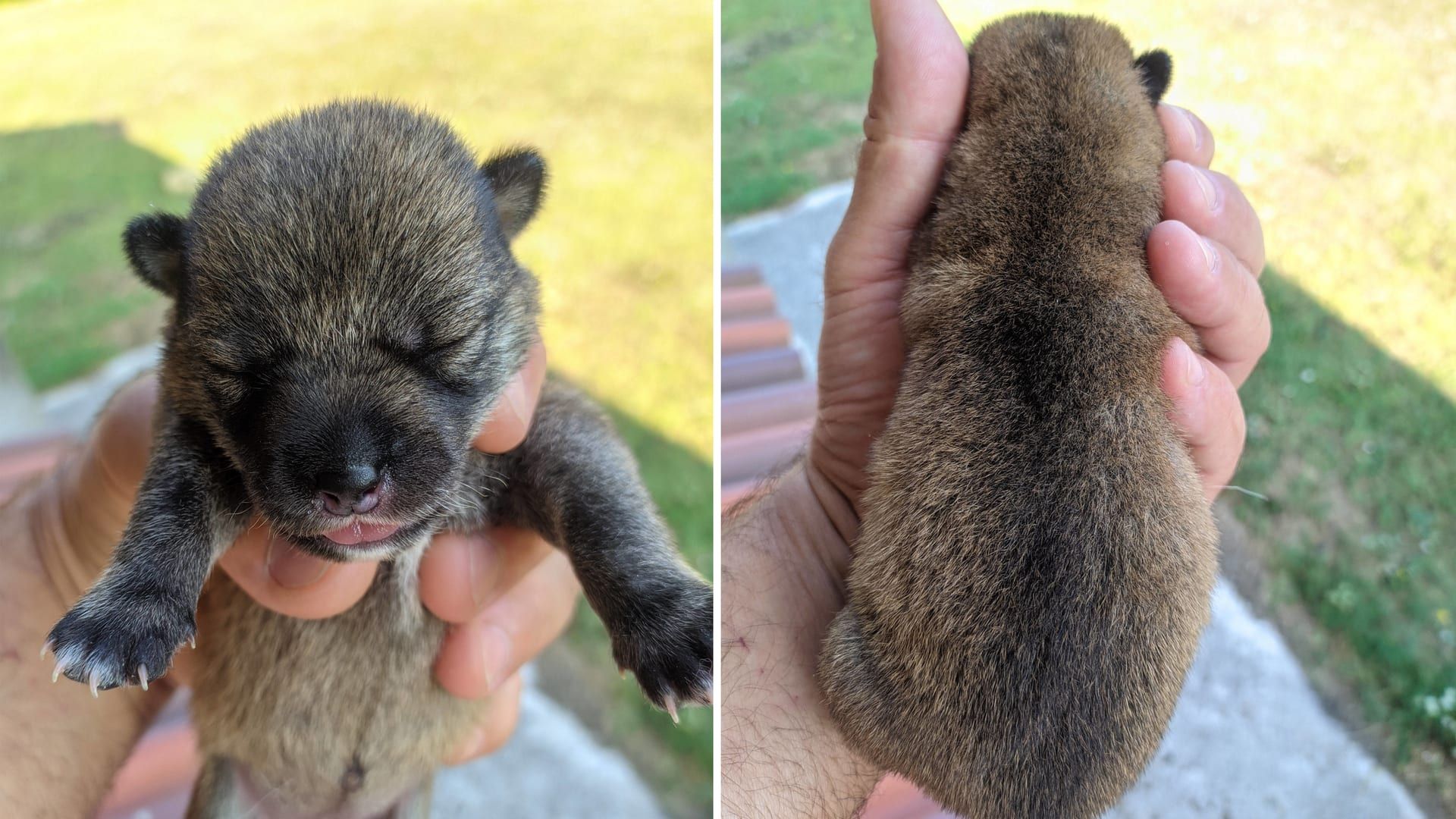
At birth, the puppy is neurologically immature: it cannot see, cannot hear, and thermoregulation is absent. The nervous system is in a phase of explosive growth. It is a temporal window in which the brain is extraordinarily plastic and receptive to stimuli that, at any other moment in life, would not have the same impact.
The foundational research of Scott and Fuller (1965) and Fox (1972) identified this window as the period between the 3rd and 16th day of life — an interval in which tactile, thermal and positional stimulations produce measurable and lasting effects on neurological development.
In the 1960s and 1970s, the American military developed a program called “Bio Sensor” — later known as the “Super Dog Program” — to improve the performance of military dogs. The program, subsequently popularized by Dr. Carmen L. Battaglia and taken up in Italy by the scholar Carlo Colafranceschi under the commercial name “Senso Puppy”, involved five specific exercises to be performed once a day on each puppy during this critical window:
Tactile stimulation: gentle stimulation between the toes of the paws with a cotton swab.
Head up: the puppy is held vertically with its head facing up for 3-5 seconds — the vestibular system must adapt to the unusual position.
Head down: the same position, inverted — the head facing down.
Supine position: the puppy is laid on its back in the palm of the hand for 3-5 seconds — a position of vulnerability that stimulates an adaptation response.
Thermal stimulation: the puppy is placed on a cold damp cloth for 3-5 seconds — the nervous system must register and react to the thermal stimulus.
The documented benefits include greater tolerance to stress, better cardiovascular performance, more reactive adrenal glands and greater resistance to disease. These are effects that persist into adulthood.
Beyond the protocol — what really matters
The most recent research suggests that the puppy should receive appropriate sensory stimulation during the critical window — and that this stimulation should be gentle, brief and not excessive.
This is exactly what we do every day. In fact, we start even earlier, from birth.
During labour, we assist the mother with our constant presence. We have seen that being close to her is a reassuring factor, she does not feel alone, and this makes the moment less stressful, guaranteeing a more straightforward birth; it also allows us to understand if something is wrong and to intervene immediately.
At the moment of the expulsion of the fetus, we break the placenta and clear the airways with appropriate manoeuvres. When we are sure the puppy is breathing without problems, we gently blow into its nostrils: that is where the magic happens — the puppy will memorize our smell, associating it with the mother’s, and it will be familiar to them.
It is called impregnation — it begins as soon as they are born and continues afterwards with a constant presence during daily activities.
Petting the puppies while they nurse, moving them, simply lying down next to the mother providing them warmth and shelter — all of this will teach the puppy that we are part of the family, and will condition them positively for all the activities we will carry out later.
From that moment every puppy is handled several times a day — it is impossible to look at those little bundles of fluff and not pick them up for a cuddle — following the Bio Sensor scheme, weighed and checked, effectively providing the essential early neurological stimulation.
The difference lies in awareness: knowing that what one is doing has a measurable neurological impact, and that stimulations must be calibrated accordingly. Care must be taken that the puppies are not overstimulated — stress is as harmful as a lack of stimulation — but the balance point must be found, because even within the same litter each puppy has different sensitivity thresholds.
With only 2-3 litters a year, we can devote to each single puppy the time and attention this approach requires. It is not a protocol that scales — it is craft work that requires constant presence, continuous observation and the ability to read every puppy.
The role of the mother — and why her maturity matters
There is a piece of data from research that is often overlooked: maternal behaviour is one of the most influential factors on puppy development, and mothers with more experience produce puppies with more adaptive stress profiles.
A Purdue University study showed that puppies of mothers with more birthing experience and greater maternal behaviour (licking, grooming, crouching) showed higher basal cortisol levels at the fifth week — an apparently counterintuitive finding, but one that the researchers interpreted as a sign of resilience: not an excess of stress, but a more mature and reactive HPA axis, capable of activating when necessary and switching off afterwards. As adults, these puppies showed less fear and faster adaptation to new environments.
This connects directly to our choice not to put a female into breeding before she has obtained her championship — a path that on average takes 2-3 years. It is not only a guarantee of morphological quality: it is the certainty of mating mentally mature females, ready to care for their offspring with the competence that only age and experience can give. A mature, balanced and confident mother transmits these qualities to the puppies not only genetically, but through maternal behaviour itself — an epigenetic factor that science is only today beginning to quantify.
At Shinjukawa, we have dams that show the ability to develop deep and lasting affectionate relationships with their puppies, actively playing with them, providing the appropriate behavioural patterns and even nursing them up to 3 months of age and beyond.
From weaning to delivery
Stimulation does not stop at 16 days. From the third week onwards, when the eyes and ears open and the puppy begins to explore the environment, the strategy changes.
We must say that in our kennel, during the period when there are litters, we adopt a strict health isolation protocol. Nothing enters the area dedicated to the puppies unless it has been sanitized. This requires daily cleaning and disinfection and dedicated clothing and footwear for access to the nursery.
Consequently, the puppies do not come into contact with strangers until after the second vaccination, at around 57 days of age. Yet all our owners will tell you that the puppies were perfectly socialized at delivery. How is that possible?
Over the years we have developed specific techniques that allow us to achieve the result through other paths — but that is our secret.
Around 40 days of age, the puppies are moved during the day to a dedicated area of the garden, where they can experience the environment — sun, wind, rain, other animals — and interact with toys: small bridges, tunnels, balls of various sizes, rope equipment, different surfaces (grass, tiles, wood, gravel) and objects of various materials.
Here one of the main phases of intraspecific socialization takes place: meeting “the grandparents” — elderly dogs with a temperament suited to absorbing the antics of a band of rascals and teaching them the correct codes of canine communication. This is also the importance of keeping elderly subjects in the kennel: having dogs with a calm, patient character and great experience available, capable of providing teaching and guidance to the younger subjects.
At the same time we continue the handling, subjecting the puppies to a series of activities: they are bathed and dried to get them used to grooming (and because they must be clean!), the ears and mouth are inspected, teeth, paws and genitals are checked, and the nails are trimmed. There must be no handling the puppy is not used to.
We then proceed to provide the first educational foundations: walking on the leash and recall — the nightmare of every Shiba owner. Ours is not formal training: everything happens naturally, thanks to the foundations we have laid previously. For the puppies we are part of the family, and it is natural to accept what is asked of them. They have developed a relationship, and thanks to the experience and skills of canine educators and trainers, these activities are not improvised but structured on the basis of specific professional training.
It is not the same as “letting the puppies play in the garden” — ours is a conscious and verified program that prepares every puppy for the life that awaits it with you.
What we ask of our owners is to continue this work, taking our place. It is in the Shiba’s nature to collaborate with its human — it is written in its DNA, ever since their ancestors practised the matagi hunt in the mountains of Japan — but it must trust you. You must build a bond.
Why all of this matters for your puppy
When a Shinjukawa puppy arrives in your home, it will not be a blank sheet. It is a puppy that has benefited from a cared-for gestational environment, from early neurological stimulation in the first days of life, from the care of a mature and competent mother, and from a state-of-the-art socialization and education program born of study and decades of specific experience.
It is not something that can be compressed or shortened — and it is not something that a kennel producing many litters can offer at the same level, because it requires time, presence and individual attention that cannot be provided in large numbers.
It is one of the reasons we produce few litters a year, and why every puppy that leaves Shinjukawa carries with it not only the genetics of our lines, but the emotional and behavioural foundations that were transmitted to it — an added value that is hard to replicate, a guarantee of a serene and balanced life.
This protocol is part of a wider method: read how we use modern breeding techniques and how the matching interview with families works. Our available puppies follow this path from day one.
References
- Scott J.P. & Fuller J.L. (1965). “Genetics and the Social Behavior of the Dog.” University of Chicago Press. — Foundational study on developmental stages and critical periods in the dog.
- Fox M.W. (1972). “Understanding Your Dog.” Bantam Books. — Pioneering studies on early neurological stimulation in the dog.
- Battaglia C.L. (2009). “Periods of Early Development and the Effects of Stimulation and Social Experiences in the Canine.” Journal of Veterinary Behavior, 4(5), 200–210. — ENS/Bio Sensor protocol.
- Gestational enrichment of commercial breeding dams (Canis familiaris) influences offspring behaviour. Applied Animal Behaviour Science, August 2025. — First study to demonstrate the effect of gestational enrichment on puppy behaviour in the dog.
- Basal Cortisol Concentrations Related to Maternal Behavior During Puppy Development Predict Post-Growth Resilience in Dogs. Purdue University Canine Welfare Science, 2024. — Link between maternal behaviour, neonatal cortisol and adult resilience.
- Ciani E. et al. (2015). “Pre-reproductive maternal enrichment influences rat maternal care and offspring developmental trajectories.” Frontiers in Behavioral Neuroscience, 9, 66. — Transgenerational effects of maternal enrichment on BDNF and neurogenesis.
- Maternal and neonatal canine cortisol measurement in multiple matrices during the perinatal period. PMC8297866, 2021. — Maternal cortisol and placental transfer in the dog.